Solana ETF Demand Triples: SOL Inflows Surge to $1.5B Amid Alpenglow Hype
Intelligence Bureau
While the broader cryptocurrency market has spent much of early 2026 grappling with macroeconomic uncertainty and geopolitical volatility, Solana (SOL) is carving out a distinct, high-growth narrative. As of March 7, 2026, institutional demand for Solana has reached a fever pitch, with cumulative spot ETF inflows surging to a record $1.5 billion. This influx of capital represents a "decoupling" from the erratic flow patterns seen in Bitcoin and Ethereum, signaling that sophisticated investors are no longer viewing Solana as a speculative "Ethereum Killer," but as a primary financial rail.
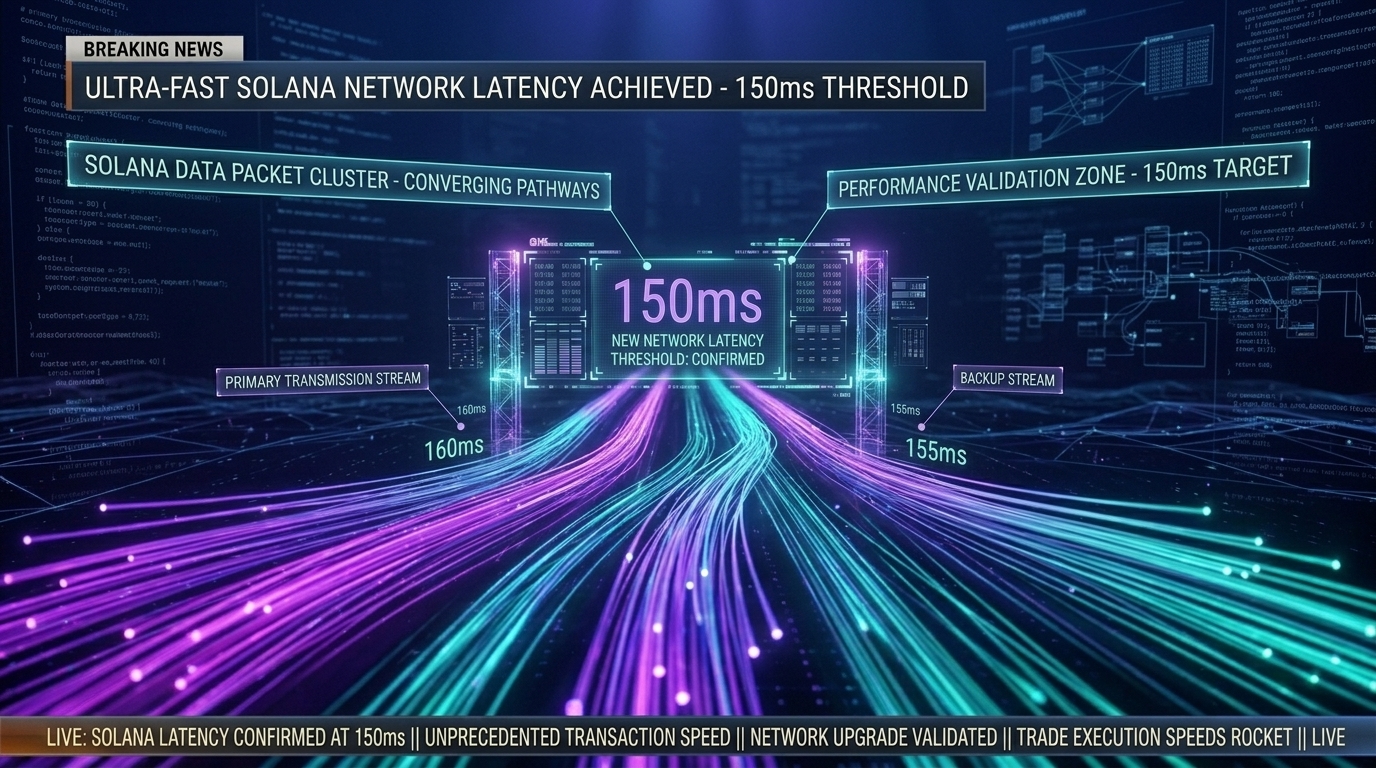
The catalyst for this institutional pivot is the imminent Alpenglow consensus upgrade. Designed to be the most significant architectural overhaul in the network's history, Alpenglow aims to replace legacy components like Proof-of-History (PoH) with a dual-system architecture dubbed Votor and Rotor. The goal is a radical reduction in transaction finality to a staggering 100–150 milliseconds, effectively bridging the gap between blockchain latency and the real-time performance of global payment giants like Visa or PayPal.
Market participants are reacting to more than just technical promises. On-chain data from February and early March 2026 reveals a fundamental shift in network usage. Solana’s stablecoin transaction volume recently hit an all-time high of $650 billion, surpassing every other blockchain including Ethereum. This "real-world" utility—driven by low-cost micropayments and cross-border settlement—is creating a supply-side squeeze that the $1.5 billion in ETF demand is only beginning to exploit.
Currently trading around the $90.76 mark, SOL has shown remarkable resilience, bouncing nearly 14% from February's local lows. With the Alpenglow mainnet rollout expected to conclude in the coming months, the market is effectively front-running what many analysts believe will be Solana's "Web2 moment."
🌍 GLOBAL MARKET IMPACT
The surge in Solana ETF demand is rewriting the 2026 institutional playbook across several key regions:
Investor Sentiment: While the Fear & Greed Index for the total market sits in "Extreme Fear," Solana's internal ecosystem sentiment is firmly bullish. The focus has shifted from "outage risk" to "throughput dominance," with 98% of validators already signaling support for Alpenglow.
Institutional Reaction: Bloomberg analysts have noted that Solana ETF flows, when adjusted for market cap, are outpacing Bitcoin's early ETF performance by double. This suggests that "Smart Money" is prioritizing the high-beta growth potential of Solana over the store-of-value narrative of BTC.
Regional Impact: In the US, firms like Bitwise and Fidelity are leading the charge, with the Bitwise Solana ETF alone holding over $700 million in AUM. Meanwhile, in Asia, the demand for SOL-based stablecoin rails is driving record-breaking network fees, nearing $24 million monthly.
🧠 ANALYST INSIGHT
"We are witnessing the professionalization of the Solana trade. In 2024, SOL was about memecoins and retail hype. In 2026, it's about $1.5 billion in institutional inflows and a $650 billion stablecoin economy. The Alpenglow upgrade is the 'Holy Grail' for traders because it removes the finality bottleneck. If Solana can settle a trade in 150ms, it doesn't just compete with other blockchains—it competes with the New York Stock Exchange." — Head of Research, Global Crypto Intelligence.
⚠️ RISK FACTORS
Implementation Risk: Alpenglow is a massive code change. Any bugs during the mainnet transition could lead to the very network outages that Solana has fought so hard to outgrow.
Liquidity Constraints: While ETF inflows are strong, if the broader "war risk" in the Middle East escalates, institutional investors may retreat into "safe haven" assets like Gold or Bitcoin, leaving high-beta assets like SOL vulnerable.
Regulatory Oversight: As Solana takes a larger share of the stablecoin market, it faces increased scrutiny from the SEC regarding its staking features and the "security" status of the native token.