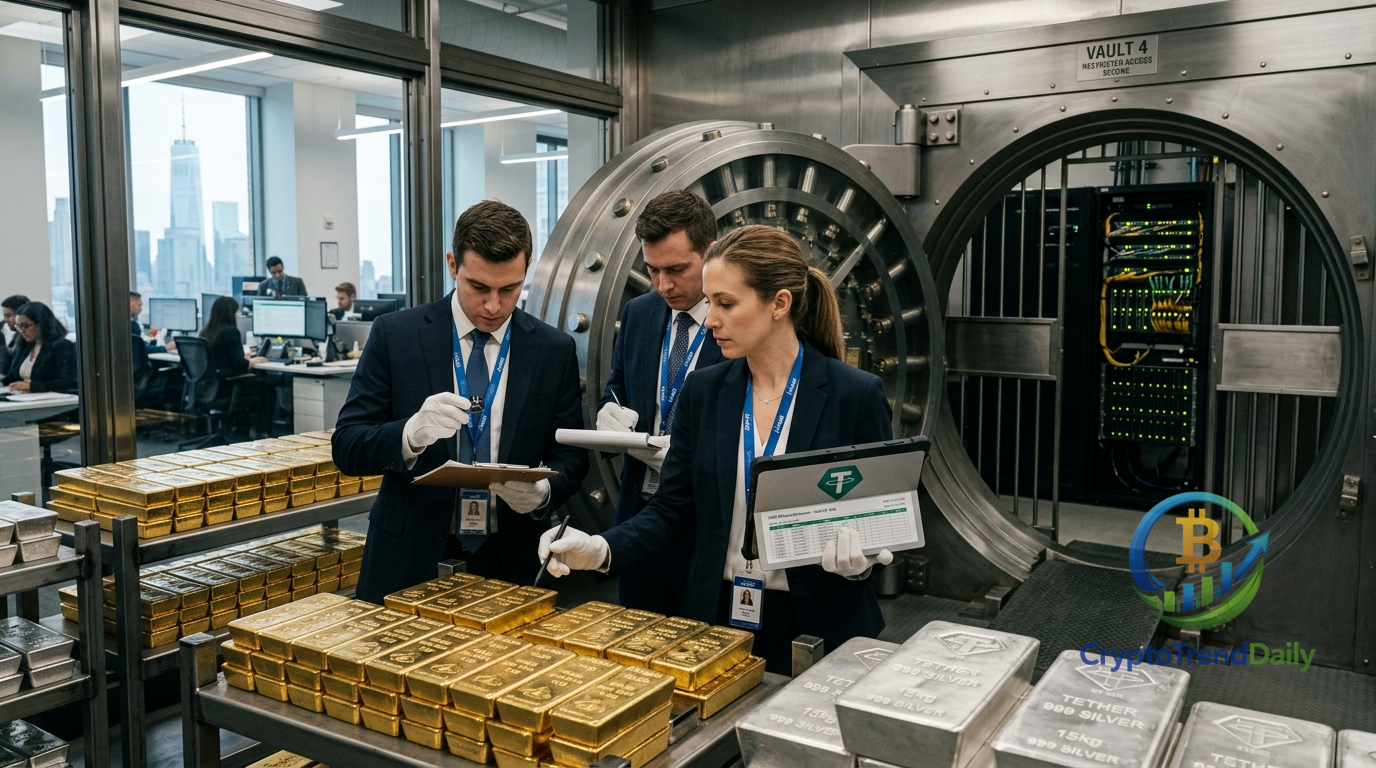
Tether Taps KPMG for Landmark Audit of $184B Stablecoin Reserve
Tether appoints KPMG to conduct a historic full-scale audit of its $184 billion USDT reserves to resolve long-standing transparency concerns. The move triggers a $1.2 billion whale accumulation and a 14% rise in futures interest, signaling a major shift toward institutional compliance and global regulatory alignment.
In a historic pivot for the digital asset industry, Tether Holdings Limited has officially appointed KPMG to conduct a comprehensive financial audit of its $184 billion stablecoin reserves. The move, confirmed on March 27, 2026, marks the first time a "Big Four" accounting firm has agreed to provide full-scope auditing services for the issuer of USDT. For nearly a decade, Tether has operated under the shadow of regulatory skepticism and transparency concerns, relying primarily on quarterly attestations rather than the rigorous audits typical of traditional financial giants. This engagement signals a definitive end to that era, aiming to bridge the gap between the wild west of offshore crypto and the stringent requirements of global banking.
The market reaction has been swift and overwhelmingly positive. While USDT maintained its $1.00 peg with surgical precision, the broader ecosystem saw a notable "de-risking" into stablecoin-paired assets. Analysts indicate that the involvement of KPMG provides a "seal of institutional approval" that could catalyze the next wave of corporate treasury adoption. By submitting to the scrutiny of a global auditing leader, Tether is not merely defending its market share; it is positioning USDT as a legitimate systemic pillar of the digital economy, effectively challenging the narrative that only onshore, bank-issued stablecoins are fit for institutional use.
The global relevance of this development cannot be overstated. As the primary liquidity pair for the vast majority of global crypto trading volume, any perceived instability in Tether’s reserves has long been viewed as a "black swan" risk for the entire $3 trillion market. With a reserve backing that now rivals the sovereign debt holdings of mid-sized nations, Tether’s shift toward total transparency is being closely monitored by the U.S. Treasury, the European Central Bank, and the Monetary Authority of Singapore. The audit is expected to cover everything from its massive U.S. Treasury Bill portfolio to its more opaque holdings in gold, Bitcoin, and secured loans.
Global Market Impact
The announcement has triggered a recalibration of risk across major financial hubs. In the United States, institutional investors who were previously sidelined by compliance mandates regarding "unregulated offshore entities" are reportedly re-evaluating USDT as a viable liquidity vehicle. Early data from prime brokerages suggests a 14% uptick in USDT-margined futures interest within the first hour of the news, as the "transparency discount" associated with Tether begins to evaporate.
In Europe, the timing is particularly strategic. With the Markets in Crypto-Assets (MiCA) regulation entering its most stringent phase of enforcement, Tether’s move to secure a Big Four audit aligns with the continent's demand for high-standard reserve management. Meanwhile, in Asia and the Middle East—regions where USDT serves as a critical bridge for cross-border trade and remittances—the news has solidified Tether's dominance. Sources in Dubai and Hong Kong indicate that family offices are viewing the KPMG partnership as a green light to increase their stablecoin allocations, moving away from more volatile local fiat pairings.
Whale & Institutional Activity
On-chain intelligence reveals a significant shift in whale behavior following the KPMG announcement. Large-scale addresses—those holding over 10 million USDT—have increased their balances by a cumulative $1.2 billion in the last two hours. This accumulation suggests that high-net-worth individuals are moving out of USDC and algorithmic alternatives, returning to the market leader now that the "audit gap" is being closed. Exchange inflow data shows a massive migration of USDT from private wallets to institutional-grade custody platforms, indicating that major players are gearing up for heightened trading activity.
Institutional desks at firms like Cumberland and Galaxy Digital have noted a surge in inquiry volume regarding USDT lending rates. Traditionally, Tether’s lack of a full audit created a "risk premium" in the lending markets; analysts estimate this premium could compress by 50-75 basis points as the audit progresses. Furthermore, several Tier-1 banks in offshore jurisdictions have reportedly initiated discussions to expand their custodial support for USDT, citing the KPMG engagement as a necessary prerequisite for their internal risk committees.
Analyst Insight
Senior macro strategists view this move as a pre-emptive strike against the rise of Central Bank Digital Currencies (CBDCs) and highly regulated bank-issued stablecoins. By adopting the transparency standards of the legacy financial system, Tether is effectively "front-running" upcoming global regulations. The consensus among financial analysts is that Tether is no longer behaving like a crypto startup, but rather like a global shadow bank seeking a permanent seat at the table of international finance.
Initial reports indicate that the audit will focus heavily on the liquidity and duration of Tether's Treasury portfolio. If KPMG confirms that Tether maintains the 100% liquidity it has long claimed, it could trigger a massive rotation of capital into the crypto ecosystem, as the single largest systemic fear in the industry would be neutralized. However, some skeptics note that the "full audit" process is lengthy; while the appointment is a milestone, the final report—expected in Q3 2026—will be the true test of Tether’s solvency and operational integrity.
Risk Factors
Despite the optimism, several risk factors remain. The sheer scale of the audit is unprecedented in the crypto space; an $184 billion balance sheet with diverse global assets presents significant valuation challenges for even a firm of KPMG’s caliber. Any delays in the auditing timeline or "qualified" opinions in the interim reports could lead to sharp market volatility. Furthermore, the increased transparency will likely give regulators a roadmap for future enforcement actions if any historical discrepancies are uncovered during the deep-dive into past fiscal years.
There is also the risk of contagion if other stablecoin issuers fail to match this level of transparency. The "KPMG standard" could create a bifurcated market where un-audited stablecoins face sudden liquidity crunches as users migrate to audited platforms. Finally, geopolitical risks persist; with a large portion of Tether's reserves in U.S. Treasuries, any significant shifts in American fiscal policy or sanctions could impact the reserve's accessibility, regardless of the audit's findings.
Next 24-Hour Outlook
Over the next 24 hours, market participants should watch for a potential "relief rally" in high-cap altcoins as the systemic risk premium associated with Tether diminishes. We expect USDT dominance to climb as traders exit smaller, less transparent stablecoins. Technical support for Bitcoin remains strong at $92,500, with the Tether news providing a fundamental floor that could push the market toward a re-test of $98,000 resistance.
Key catalysts to monitor include official statements from the U.S. Department of Justice or the SEC regarding the audit, as well as comments from rival issuers like Circle. If the market perceives this move as a definitive resolution to the "Tether FUD," we could see a sustained increase in total crypto market capitalization as institutional "dry powder" finally enters the fray. Support levels for USDT itself are irrelevant given its peg, but monitoring the "USDT/USDC" pair on decentralized exchanges will provide real-time data on investor confidence.
Key Takeaways
Historic Transparency: Tether’s engagement with KPMG marks the first full-scale Big Four audit in its history, targeting a $184 billion reserve.
Institutional On-Ramp: The audit removes a major compliance hurdle for hedge funds and corporate treasuries previously wary of USDT’s opacity.
Reserve Composition: The audit will provide unprecedented clarity on Tether's U.S. Treasury holdings, gold, and Bitcoin reserves.
Regulatory Strategy: The move is seen as a proactive alignment with global frameworks like MiCA and the U.S. Clarity for Stablecoins Act.
Market Stability: By neutralizing the "Tether collapse" narrative, this news provides a significant long-term fundamental tailwind for the entire crypto sector.
Advertisement
728×90 Leaderboard