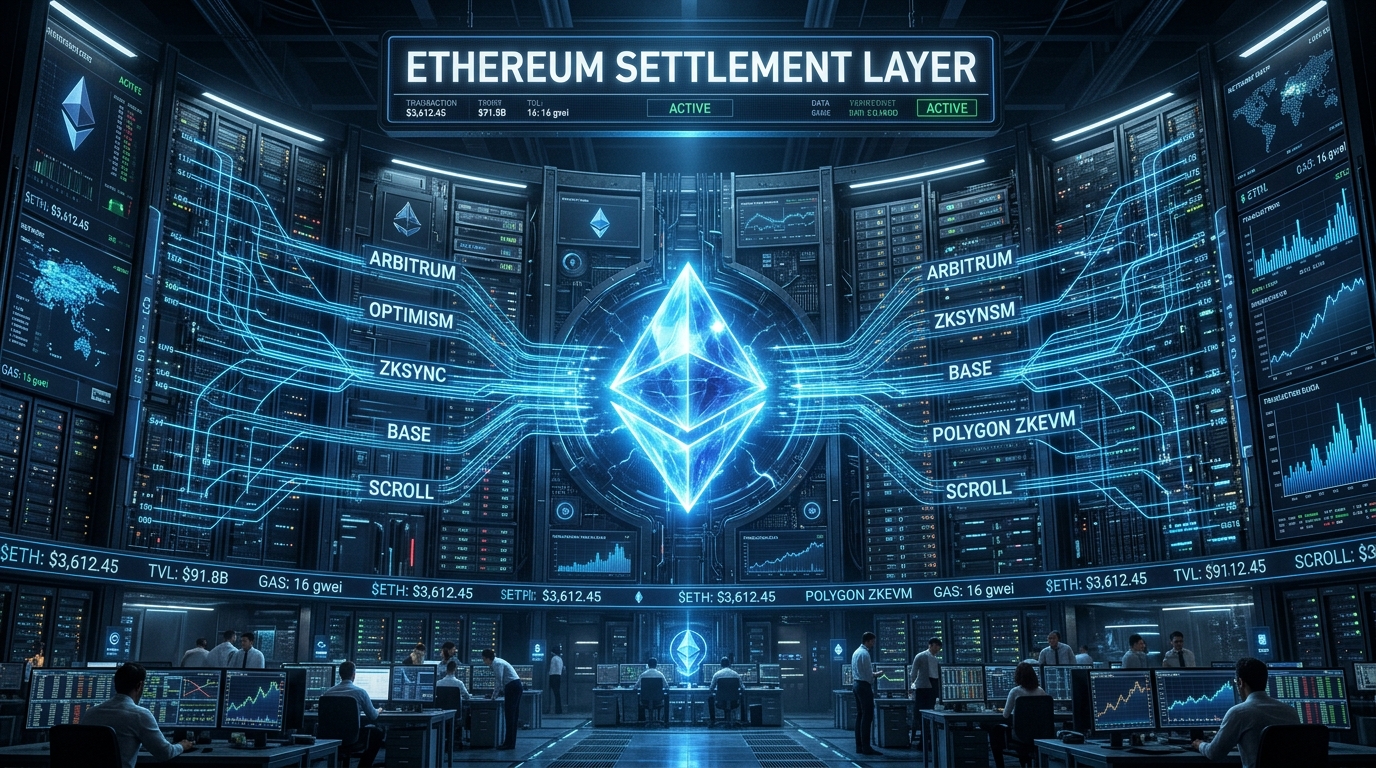
Ethereum Transactions Near Zero: The 2-Year Dencun Anniversary Rally
Intelligence Bureau
Two years after the landmark Dencun upgrade first introduced "blobs" to the Ethereum mainnet, the network has officially entered an era of ultra-low-cost scalability. As of March 13, 2026, transaction fees across major Layer 2 (L2) networks like Arbitrum, Optimism, and Base have effectively collapsed toward zero, with median costs often sitting below $0.01. This structural shift has fundamentally altered Ethereum’s market position, moving the blockchain from a high-fee "luxury" network to a high-volume, low-margin global settlement layer.
The market's reaction has been one of cautious optimism. After a volatile February that saw Ether (ETH) drop briefly into the $1,700 demand zone, the asset successfully reclaimed the psychologically critical $2,000 level this week. This recovery is not merely a technical bounce; it is supported by a confluence of rising on-chain activity and the launch of new institutional products, including BlackRock’s iShares Staked Ethereum Trust (ETHB), which began trading on Nasdaq on March 12.
As Ethereum transitions through its 2026 roadmap—specifically looking toward the upcoming Glamsterdam and Hegotá upgrades—the "Layer 2 Paradox" has become the central theme for investors. While mainnet fee revenue has declined due to the efficiency of EIP-4844 and subsequent blob expansions, total network engagement has reached record highs, with daily transactions consistently surpassing 2.5 million.
🌍 GLOBAL MARKET IMPACT
The shift to an L2-dominant ecosystem has global implications for both retail and institutional participants. In the United States, the focus has shifted toward regulatory clarity and the integration of ETH into traditional finance through spot and staked ETFs. The positive turnaround in the Coinbase Premium Index suggests that U.S. institutional demand is returning after a period of capital outflows in late 2025.
In Asia and Europe, the impact is most visible in the "cultural economy" of Web3. Near-zero fees have sparked a resurgence in DeFi and NFT activity on L2s, making micropayments and gaming economically viable for the first time. This "retail migration" to scaling solutions has successfully drained congestion from the mainnet, though it has raised questions about the long-term "Ultra-Sound Money" deflationary narrative as fewer tokens are burned on Layer 1.
🧠 ANALYST INSIGHT
Analysts suggest that Ethereum is currently in a "re-valuation phase." The old model of valuing ETH based on mainnet gas spikes is becoming obsolete. Instead, the network is being viewed as the "foundational settlement layer" for a tokenized global financial system. According to researchers at Grayscale, the 2026 cycle is likely to break the traditional "four-year cycle" theory, as macro demand for scarce digital commodities like ETH grows amid rising fiat currency risks. The key transition in 2026 is from retail-led speculation to regulated capital flows.
⚠️ RISK FACTORS
Despite the bullish structural changes, several risks remain:
Value Capture Concerns: With 99% of transactions moving to L2s, the mainnet's "burn rate" has dropped significantly, slowing the deflationary pressure on ETH.
Technical Resistance: ETH remains below its 100-day and 200-day moving averages. Failure to sustain the $2,000 level could lead to a retest of the $1,647 macro support line.
L2 Concentration: A significant portion of transaction volume is concentrated on a few sequencers (e.g., Base and Optimism), creating potential central points of failure or regulatory targets.
🔮 NEXT 24-HOUR OUTLOOK
For the next 24 hours, the focus remains on the $2,087 resistance level. A sustained close above this mark could invalidate the bearish trend and open the door toward $2,164. Conversely, watch for volatility around the U.S. market open, as further ETF inflow data could either cement the $2,000 floor or trigger a minor correction if profit-taking ensues.
📈 KEY TAKEAWAYS
L2 Fees: Transaction costs on Ethereum scaling solutions are now near zero, driving record on-chain activity.
Institutional Shift: The launch of staked ETH ETFs (ETHB) marks a new era for regulated institutional access.
Whale Support: Large-scale accumulation at $2,000 suggests a strong "smart money" floor is forming.
Upgrade Roadmap: 2026 is the year of Glamsterdam, focusing on parallel processing and network neutrality.
Advertisement
728×90 Leaderboard