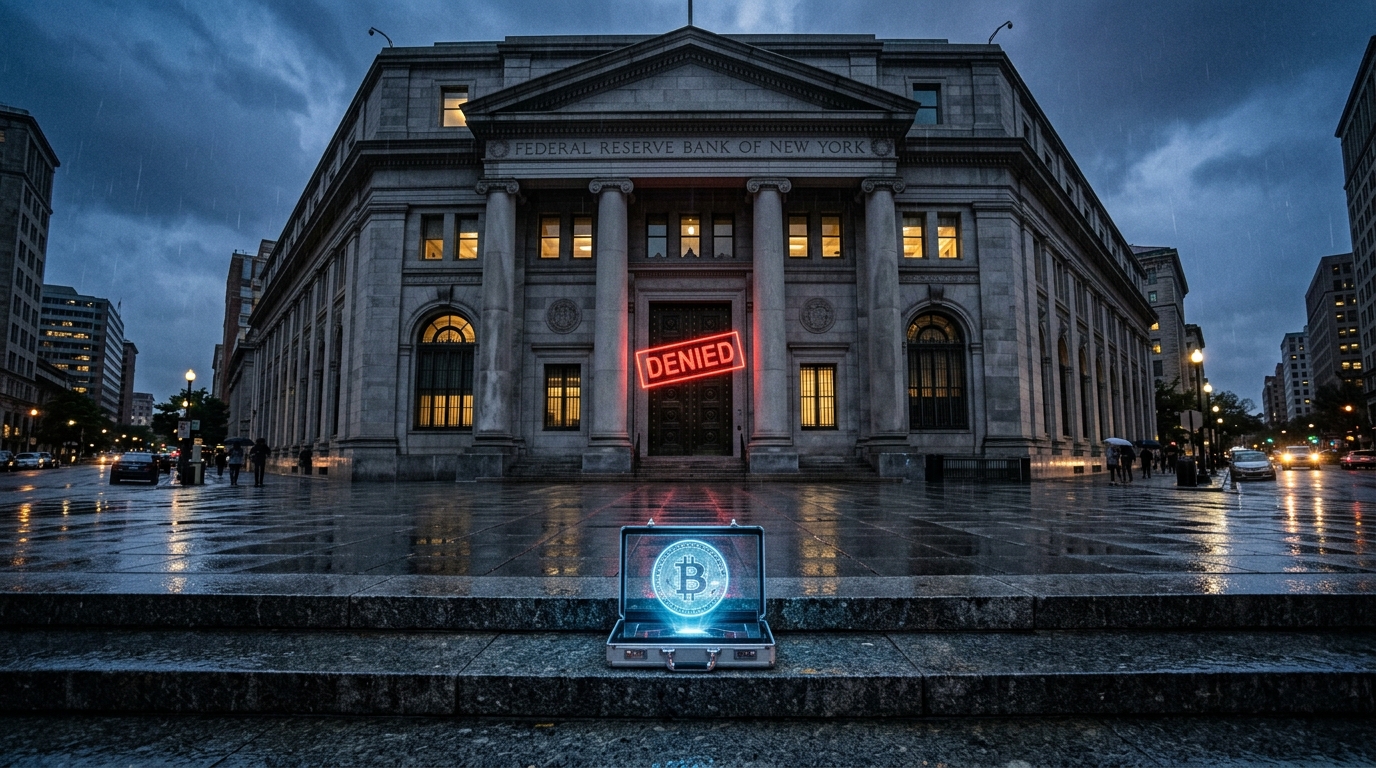
Fed Wins: Appeals Court Rejects Custodia Bank’s Final Master Account Bid
Intelligence Bureau
On March 13, 2026, a five-year legal odyssey that promised to bridge the gap between digital assets and the U.S. central banking system reached a definitive and sobering conclusion. The U.S. Court of Appeals for the Tenth Circuit, in a 7–3 decision, rejected Wyoming-based Custodia Bank’s final appeal to compel the Federal Reserve to grant it a "master account." This ruling solidifies the Federal Reserve’s absolute discretion over which institutions can access its payment rails, effectively barring crypto-native banks from direct settlement without intermediary partners.
Custodia Bank, founded by Wall Street veteran Caitlin Long, argued that as a legally chartered and eligible depository institution, it was statutorily entitled to a master account under the Monetary Control Act of 1980. The bank’s mission was to provide a "fortress" for crypto firms, offering 1:1 backed deposits and direct Fed access to avoid the counterparty risks associated with the "shadow banking" layers that crypto firms currently rely on.
However, the majority opinion upheld a lower court's ruling that eligibility does not equal entitlement. The court found that regional Federal Reserve Banks have the "unreviewable discretion" to deny accounts based on perceived risks to the national financial system—in this case, the risks associated with Custodia’s crypto-focused business model. The decision marks a significant victory for federal regulators seeking to maintain a "high wall" between traditional banking and the digital asset ecosystem.
🌍 GLOBAL MARKET IMPACT
The ruling has sent a clear message to the global crypto banking sector: the path to mainstream integration in the U.S. is narrowing. In Europe, where the MiCA (Markets in Crypto-Assets) regulation has already provided a clearer licensing framework, the Custodia defeat is being viewed as a "protectionist" move by the Fed. Analysts expect an acceleration of crypto firms moving their primary banking hubs to crypto-friendly jurisdictions like Switzerland or the UAE, where central bank access is becoming more programmatic and less discretionary.
Within the United States, the sentiment among fintech and crypto startups is one of frustration. Many argue that by denying "safe" and highly regulated banks like Custodia access to the Fed, the regulator is ironically pushing crypto activity back into the less transparent corners of the financial system. However, the market reaction was partially cushioned by the recent news that Kraken’s banking arm received a "limited" master account from the Kansas City Fed on March 4, suggesting the Fed may prefer a "skinny" access model over full banking integration.
🧠 ANALYST INSIGHT
The dissenting opinion by Judge Timothy Tymkovich has become a rallying cry for the industry. Tymkovich argued that a master account is "indispensable" for a bank's operations and that denying one is "akin to a death sentence." Analysts at CoinDesk and The Block suggest that the "death sentence" isn't just for Custodia, but for the Wyoming SPDI (Special Purpose Depository Institution) model as a whole. Without Fed access, these institutions are reduced to expensive software layers on top of traditional correspondent banks, losing their competitive advantage.
⚠️ RISK FACTORS
Centralization Risk: By forcing crypto firms into a handful of "too big to fail" banks, regulators are creating new systemic choke points.
Jurisdictional Arbitrage: The U.S. risks a "brain drain" as the brightest crypto-banking minds move to jurisdictions with clearer central bank access laws.
Legal Precedent: This ruling may make it nearly impossible for any non-traditional fintech to challenge a Fed denial in the future, cementing the Fed's role as the ultimate gatekeeper.
🔮 NEXT 24-HOUR OUTLOOK
In the immediate term, expect a statement from Caitlin Long regarding a potential Supreme Court appeal. While the odds of SCOTUS taking the case are slim, the constitutional questions regarding "unreviewable discretion" may draw interest.
Key Support: Watch the $3.2T total crypto market cap; if regulatory FUD (Fear, Uncertainty, Doubt) spreads, we could see a 2-3% pull-back in mid-cap "utility" tokens.
Key Catalyst: Further details on the Fed's "skinny account" policy, which could provide a "consolation prize" for the industry.
📈 KEY TAKEAWAYS
Final Blow: Custodia’s five-year legal battle for a Fed master account has effectively ended.
Fed Power: The court confirmed that the Federal Reserve has absolute discretion over account approvals.
Dissenting Warning: Judges warned that this creates an "unreviewable" power that threatens the state-federal banking balance.
Pivot to "Skinny": The industry's only hope for Fed access now lies in the "limited" or "skinny" account models recently granted to Kraken.
Advertisement
728×90 Leaderboard